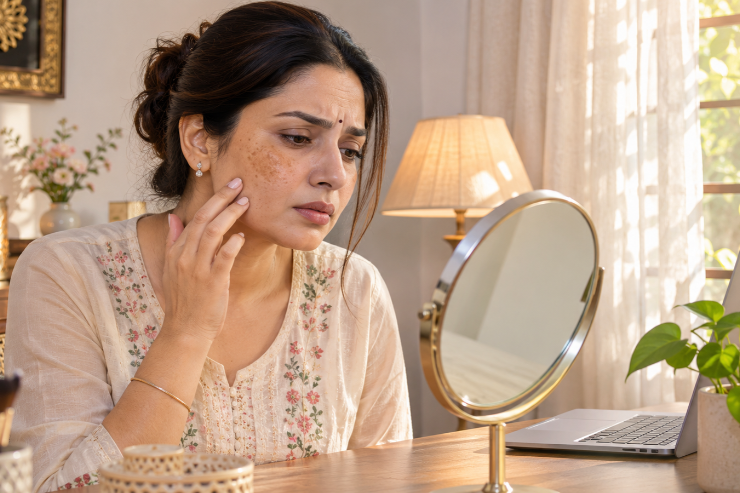
Staying indoors, skipping the afternoon sun, and your melasma patches still look darker? That can feel unfair and confusing. Melasma reacts to more than direct sunlight. Daylight through windows, kitchen heat, rubbing the skin, and hormonal changes can all keep it active at home. The good part is that small daily changes, the right sunscreen for melasma, and medical treatment can help keep it under control. Here is what may be triggering it, and what helps.
What Makes Melasma So Stubborn?
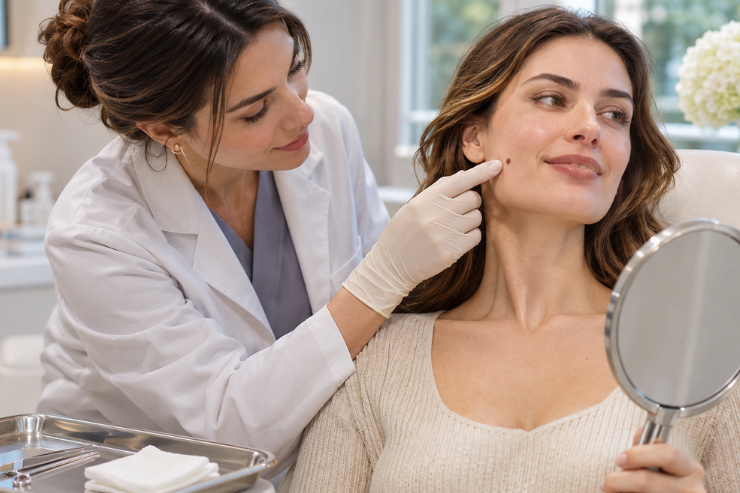
Melasma shows up as brown or grey-brown patches, usually on the cheeks, forehead, upper lip, and nose. It is common in women and in Indian skin.
It is not just a pigment problem. According to research, deeper skin layers and tiny blood vessels also play a part. This is one reason melasma can return after it fades, and why regular follow-up care helps.
With consistent care and treatment, melasma can be well managed, though it often needs long-term maintenance.
Melasma, Tan or Dark Spots: How to Tell Them Apart
| Condition | What it usually looks like |
| Tan | Even darkening that fades over a few weeks |
| Dark spots | Marks left after a pimple, cut, or burn |
| Melasma | Matching patches on both sides of the face that keep returning |
Marks or scars left by pimples need a different approach, such as the methods used for acne scar removal in Kolkata. Our guide on hyperpigmentation vs. tan explains these differences in more detail.
Can Heat From Cooking Make Melasma Darker?
You may have noticed that patches look darker after time in the kitchen. Studies recognise intense heat as a factor in melasma, and even advise cooks and bakers to be aware of it. Research on heat is still limited, though.
Common heat sources at home:
- Cooking over a gas stove, tawa, or kadai
- Opening a hot pressure cooker or oven
- Long, hot showers.
- Hair dryers held close to the face
- Warm rooms with poor airflow, common in Kolkata's humid weather
Simple steps that help:
- Switch on the exhaust fan or chimney while cooking
- Step back when opening a pressure cooker or oven
- Wash your face with lukewarm water
- Cool your skin with a damp cloth after cooking
Does Sunlight Through Windows Affect Melasma?
Yes, it can. According to research, UVA rays can pass through window glass and reach you indoors. Glass blocks most UVB rays, the ones that cause sunburn. That is why you may not burn near a window, but your skin can still react.
Visible daylight also comes through glass, and it can affect melasma too.
Simple steps that help:
- Move your work desk out of direct window light
- Use curtains or blinds during bright hours
- Consider UV-protective film on windows you sit near often
- Remember that car side windows let light through as well
Does Blue Light From Screens Worsen Melasma?
This is a common worry. Studies show that visible light, including blue light, can cause long-lasting pigmentation in darker skin. However, research measuring device screens found their light to be 100 to 1,000 times weaker than sunlight in the same range.
| Source | Level of concern |
| Sunlight through windows | Higher; worth protecting against |
| Phone and laptop screens | Much lower |
| Ordinary room lights | Much lower |
There is no need to sit in the dark or avoid your devices. Protecting your skin from window daylight matters more.
Choosing the Right Sunscreen for Melasma Indoors
Why Regular Sunscreen Is Not Always Enough
According to research, regular untinted sunscreens block UVA and UVB rays, but they are not designed to block visible light. Sunscreen also does not block heat.
How Tinted Sunscreen With Iron Oxide Helps
Iron oxide is the ingredient that gives tinted sunscreen its colour, and it helps block visible light.
- A review of studies found iron oxide sunscreens protected better against visible-light pigmentation than untinted ones. Many of these studies were funded by sunscreen makers, so more independent research is needed.
- In one melasma study, patients using a sunscreen with visible light protection saw more improvement than those using UV-only sunscreen.
How to use it:
- Apply a tinted, broad-spectrum SPF 50+ sunscreen every morning, even on work-from-home days
- Reapply if you sit near a window for long hours
- Check the ingredient list for "iron oxide"
Sunscreen supports treatment, but it does not replace it. Results vary from person to person.
How to Stop Melasma From Getting Darker at Home
Some habits that seem harmless can irritate the skin, and irritated skin may darken further. Small daily changes can make a real difference.
Habits That Can Darken Melasma
| Habit | Why caution helps |
| Facial steaming | Adds heat directly to the skin |
| Gritty scrubs and rubbing | Friction irritates the patches |
| Lemon or kitchen remedies | Can sting and irritate the skin |
| Unprescribed “fairness” or steroid creams | Can damage facial skin |
According to studies, people who misused steroid creams on the face, about a quarter developed increased sensitivity to light. This is different from creams prescribed and monitored by a doctor.
Daily Habits That Help
- Use a gentle cleanser and a simple moisturiser
- Pat your face dry instead of rubbing
- Use only creams prescribed for your skin
Why Melasma Changes Even When You Follow Every Rule
Melasma also has triggers from within the body.
- Hormones: pregnancy, birth control pills, and hormone therapy can make melasma worse. According to research, hormone therapies can increase the skin's reaction to light.
- Certain medicines: some medicines make skin more sensitive to light.
- Stress and sleep: these may play a role in some people.
What helps:
- Bring a list of your medicines and supplements to your consultation
- Mention irregular periods or any thyroid history
- Never stop a prescribed medicine without speaking to your doctor first
How Is Melasma Treated When It Keeps Darkening?
Treatment is planned around how deep the pigment sits and what triggers it. A skin treatment in Kolkata tends to work better when combined with daily sun and heat care.
| Treatment | What it does |
| Prescription creams | Ingredients such as hydroquinone, retinoids, azelaic acid, or kojic acid help slow pigment production |
| Chemical peels | Mild acids gently remove the top layer of pigmented skin |
| Laser toning | Low-energy light breaks down excess pigment |
Most people need more than one treatment, and maintenance helps reduce relapse. Individual results vary from person to person.
Staying Indoors Is Not the Main Solution
Melasma can darken indoors because window daylight, heat, everyday habits, and hormones all play a part. Knowing your triggers makes daily care and treatment work better together. Using the right sunscreen for melasma every morning, keeping your skin cool, and avoiding irritation are simple steps that support any treatment plan. A doctor’s assessment can help identify your melasma type and the treatment that suits your skin.
Author:
Dr. V S Rathore
M.B.B.S. (Hons) MS, M. Ch
Plastic, Cosmetic & Reconstructive Surgeon
Frequently Asked Questions
1. Can melasma go away on its own?
Melasma sometimes fades, especially after pregnancy or stopping a hormonal trigger. For many people, though, it needs ongoing care. Daily sun protection and treatment can help keep it lighter. Results vary from person to person.
2. Can makeup replace sunscreen for melasma?
Not on its own. Some tinted makeup contains iron oxide, which may add some visible light protection, but it may not give enough coverage. Apply sunscreen first, then makeup if you like.
3. Does an air-conditioned room help melasma?
A cool room may reduce heat-related triggers, since intense heat is thought to play a role in melasma. It does not replace sunscreen or treatment, but staying cool can be a helpful daily habit.
4. Does pregnancy melasma fade after delivery?
It may lighten in the months after delivery, but not always. Hormonal changes and sun exposure can affect how quickly it fades. If it stays, treatment options can be discussed once it is safe after pregnancy.
5. Is laser treatment safe for melasma on Indian skin?
It can be, when settings are chosen to suit darker skin. A careful skin assessment helps match the laser and settings to each person. Laser toning is usually combined with sunscreen and prescribed creams for steadier results.
Disclaimer: This content is for general educational purposes only and does not constitute medical advice. Individual results may vary. Please consult your treating doctor for a personalised assessment before starting any treatment.