Lipoedema: When Leg Fat Doesn’t Respond to Diet
Diet changes start to show. The waist slims, the face looks lighter, yet the thighs, hips and lower legs stay almost the same. They may feel heavy, ache when touched, or bruise from the lightest bump. Many women quietly blame themselves for years, assuming they are not trying hard enough. In my clinic, this pattern sometimes points to something different: a medical condition called lipoedema, which has little to do with willpower.
What Is Lipoedema? A Fat Condition, Not Just Weight
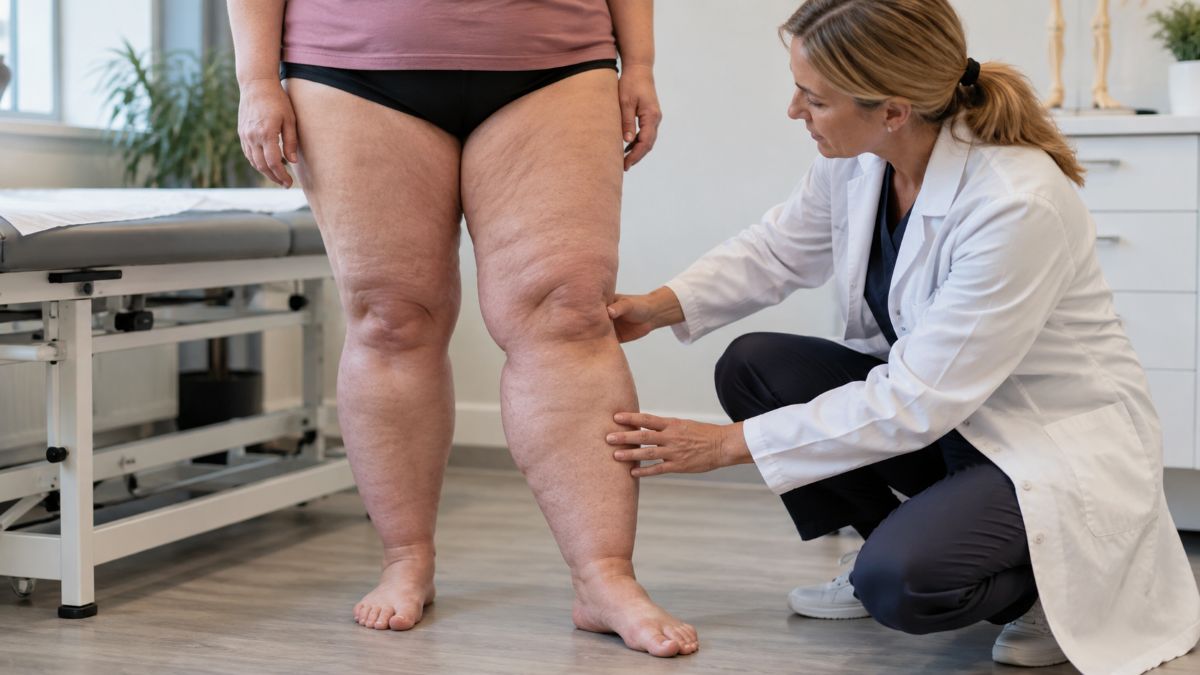
Lipoedema is a long-term condition in which fat builds up abnormally in the legs, thighs, and buttocks, and sometimes in the arms. It mostly affects women. Men can be affected too, but this is rare.
One point matters more than any other: lipoedema is not caused by obesity. It can affect women who are a healthy weight. When it is treated as ordinary weight gain, it can go unrecognised for years.
Signs of Lipoedema to Look Out For
Common signs include:
- Both legs, or both arms, are larger to a similar degree
- The feet and hands stay unaffected, which creates a "band" just above the ankles or wrists
- The affected areas feel soft, cold, or "doughy"
- Bruising happens easily
- There is aching, pain, or tenderness
- Small broken veins appear under the skin
- The changes slowly increase over time
- Knee discomfort or reduced ease of movement
Having some of these signs does not confirm lipoedema. A proper medical examination is needed.
Why Dieting Doesn't Shrink Lipoedema Fat
This is often the most frustrating part for patients. When someone with lipoedema diets, fat usually reduces from the areas that are not affected, while the legs change very little.
Lipoedema also does not respond to raising the legs or to water tablets (diuretics).
A healthy weight still matters, though. Significant weight gain can make the fatty swelling worse, so a steady, balanced routine supports long-term management.
Lipoedema, Lymphoedema or Obesity: The Difference
Lipoedema is often mistaken for lymphoedema or obesity.
| Lipoedema | Lymphoedema | |
| What builds up | Abnormal fat | Fluid in the lymphatic system |
| Pressing the skin | Does not leave a dent | Leaves a dent |
| Swelling pattern | Stays constant | May worsen by evening and ease overnight |
Over time, the fat build-up in lipoedema can affect fluid drainage. When this happens, lymphoedema develops alongside it. This combination is called lipo-lymphoedema.
Lipoedema is also different from obesity, which is why it should not be dismissed as simple weight gain.
What Causes Lipoedema?
The exact cause is not known. A few patterns are recognised:
- It sometimes runs in families, which suggests genes play a role
- It tends to begin around puberty, pregnancy, or menopause, all times of hormonal change
Lipoedema Is Treatable, but Not Curable
There is currently no cure for lipoedema. It is a long-term condition, and it can progress over time.
"Treatable," however, is a meaningful word here. Lipoedema treatment aims to:
- Reduce the abnormal fat build-up
- Improve comfort and ease of movement
- Improve the shape and proportion of the affected limbs
Individual results vary from person to person.
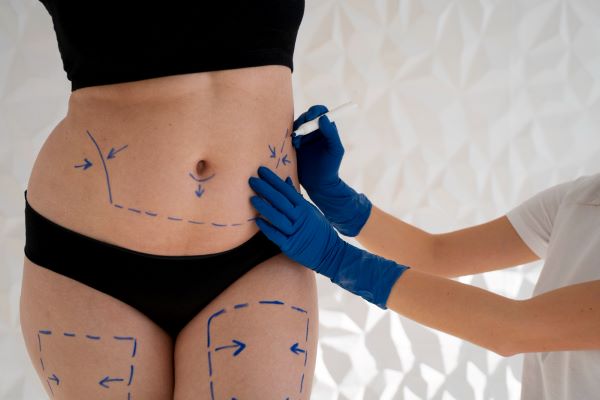
What Liposuction Offers in Lipoedema Treatment
According to Research, tumescent liposuction is the only treatment that appears to reduce the fat build-up linked with lipoedema.
In simple terms, a fluid is first injected into the area to numb it and reduce bleeding. The fat is then removed through a thin tube.
| What to know | Why it matters |
| More than one operation may be needed | Different areas may be treated in stages |
| Weight gain can bring the swelling back | A steady weight helps maintain the result |
| Compression garments are worn afterwards | They help prevent complications such as lymphoedema |
For anyone considering liposuction in Kolkata for lipoedema, it helps to know that treatment may be planned step by step rather than as a single procedure. Liposuction is also not a weight-loss method. Its role here is to reduce the affected fat, not to lower overall body weight.
Where Body Contouring Fits In
Body contouring looks at the body as a whole rather than one area alone. In lipoedema, this means planning around overall proportion: the thighs, hips, lower legs and, in some cases, the arms. Liposuction is the main treatment within this plan.
Discussing body contouring in Kolkata with a qualified plastic surgeon helps set realistic goals for shape and comfort.
The Emotional Side of Lipoedema
Lipoedema can affect more than the body. Reduced mobility and low self-esteem are recognised effects.
Many women have spent years being told to simply eat less. Lipoedema is a recognised medical condition, not a personal failing. If it is weighing on you, talking to family or a counsellor can help.
When Should You See a Doctor?
It is worth getting checked if:
- Your legs or arms are enlarged on both sides, while your feet and hands are not
- The area bruises easily or feels painful
- The changes are slowly increasing
There is no single test for lipoedema. Diagnosis is based on your symptoms, your history, and a careful examination.
Seek medical care promptly if a leg becomes swollen, red, hot, and painful along with flu-like symptoms. This may be cellulitis, a skin infection that needs antibiotic treatment.
Lipoedema can also increase the risk of fungal infection in skin folds, so keeping these areas clean and dry is important, especially in humid weather.
Understanding Your Body Is the First Step
Lipoedema is real; it is often missed, and it is treatable, though not curable. Understanding the pattern can bring relief after years of self-blame.
If this sounds familiar, start by noting where the fat sits, how it feels, and how it has changed over time. Sharing these notes with a qualified doctor or plastic surgeon can help you understand what your body needs.
Author:
Dr. V S Rathore
M.B.B.S. (Hons) MS, M. Ch,
Plastic, Cosmetic & Reconstructive Surgeon
Frequently Asked Questions
1. Can men get lipoedema?
Yes, but it is rare. Lipoedema mainly affects women, and it often begins during times of hormonal change such as puberty, pregnancy, or menopause. Men with similar symptoms should still have a proper medical examination.
2. Can lipoedema affect the arms?
Yes, sometimes. The arms can be affected, usually on both sides. The hands are typically spared, which can create a band-like look just above the wrists. Your doctor can check this during an examination.
3. Does lipoedema get worse over time?
It can. Lipoedema may slowly progress, and in some people it can later lead to fluid build-up known as lipo-lymphoedema. Early recognition helps you understand the condition and plan its management sooner.
4. Can a slim person have lipoedema?
Yes. Lipoedema is not caused by obesity and can affect women of a healthy weight. The pattern of fat, not overall body weight, usually points towards the diagnosis during an examination.
5. Can lipoedema come back after liposuction?
The fatty swelling may return if weight is gained after the procedure. Keeping a steady weight and following your aftercare advice, including compression garments, helps support the result over time.
Disclaimer: This content is for general educational purposes only and does not constitute medical advice. Outcomes vary between individuals. Please consult your treating doctor for a personalised assessment before starting any treatment.