Dull & Uneven Skin During Monsoon: Can Microdermabrasion Help?
Monsoon brings relief from the heat, but it also brings a familiar complaint to every cosmetic surgeon's clinic: skin that looks tired, patchy, and lifeless. If your glow has gone missing since the rains started, you are not imagining it. As a cosmetic and plastic surgeon, I see this pattern every year, and there is a clear medical explanation behind it — along with a well-studied solution worth understanding before you try anything else.
Why Monsoon Skin Looks Dull and Uneven
Humidity does more than frizz your hair. It changes how your skin behaves at a cellular level.
- Excess humidity traps sweat, oil, and pollutants on the surface, clogging pores and dulling the natural glow.
- Surface buildup from trapped sweat, oil, and humidity causes dead skin cells to accumulate faster than they shed, leaving skin looking flat and rough.
- Fungal and bacterial activity rises in moist conditions, often triggering patchy pigmentation or breakouts.
- Fluctuating oil production — skin can feel oily and dehydrated at the same time, confusing your regular skincare routine.
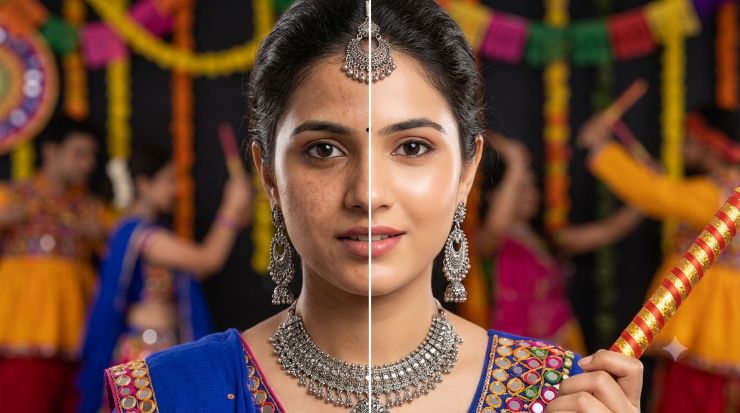
The result is a dull, congested, uneven complexion that ordinary cleansers and creams struggle to fix on their own.
What Is Microdermabrasion, Medically Speaking
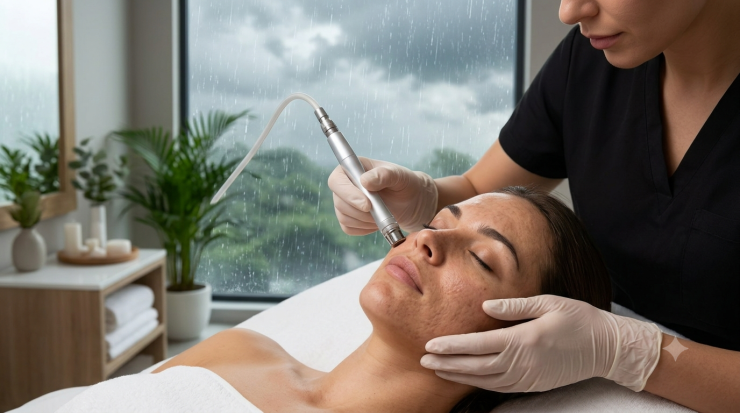
Microdermabrasion is a non-surgical, physical exfoliation procedure. A handheld device gently sprays fine crystals or uses a diamond-tipped wand across the skin's surface, lifting away the outermost layer of dead, dull cells.
Unlike harsh scrubs, it is controlled, uniform, and performed by a trained professional — which matters, because uneven pressure or an unsuitable device can irritate already-sensitised monsoon skin.
How the Procedure Works
- Skin is cleansed thoroughly to remove surface oil and pollutants.
- The device passes over the face in gentle, even strokes.
- Dead skin cells and surface debris are suctioned away simultaneously.
- A soothing serum or moisturiser is applied to calm the skin post-procedure.
The entire session typically takes 30–45 minutes, with no needles, no incisions, and no downtime for most patients.
How Microdermabrasion Helps With Monsoon Dullness
From a clinical standpoint, here is why this procedure is well suited to the season's specific skin problems:
- Removes the dead cell buildup that humidity causes, instantly improving light reflection and giving skin a fresher appearance.
- Unclogs pores, reducing the congestion behind monsoon breakouts.
- Improves product absorption, so your regular moisturiser or serum actually penetrates instead of sitting on a dull surface layer.
- Softens superficial pigmentation and rough patches, evening out tone gradually over a course of sessions.
It is important to set realistic expectations: microdermabrasion refines texture and surface tone. It is not a treatment for deep pigmentation, active infections, or scarring — those need a proper diagnosis and a different approach.
Who Should Consider It — and Who Shouldn't
Many people considering a hydra facial ask whether microdermabrasion does the same job — it doesn't, but the two often complement each other well, which we'll cover shortly.
A good candidate typically has:
- Mild to moderate dullness or unevenness
- Clogged pores or rough texture
- No active acne infection or open wounds
- Realistic expectations about gradual improvement
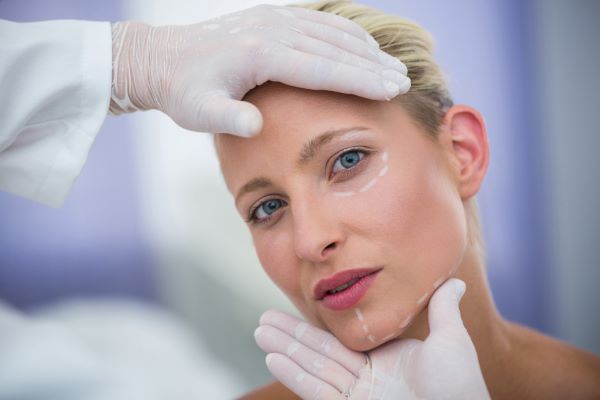
It is best avoided, at least temporarily, by people with active fungal infections, eczema flare-ups, rosacea, or very sensitive/broken skin — all of which are more common in monsoon. This is exactly why a consultation with a qualified cosmetic surgeon or dermatologist matters before booking any skin treatment: the same humidity that dulls your skin can also mask an underlying condition that needs medical attention first, not exfoliation.
What Happens After the Session
Aftercare during monsoon needs a slightly different approach than other seasons.
- Avoid direct rain exposure and heavy sweating for 24–48 hours.
- Use a lightweight, non-comedogenic sunscreen even on cloudy days.
- Skip strong actives (retinol, high-strength acids) for a few days post-procedure.
- Keep the skin dry between sessions to prevent fungal recurrence.
Most people notice smoother, brighter-looking skin within a day or two, with cumulative improvement over 3–6 sessions spaced a few weeks apart.
Where It Fits Among Other Monsoon Skin Treatments
Microdermabrasion works well on its own, but it is often combined with other procedures depending on your skin's specific needs.
When Dryness and Congestion Both Need Attention
A hydra facial adds a deeper hydration and extraction step that pairs naturally with microdermabrasion for patients dealing with both dryness and congestion at the same time.
When Uneven Tone Is the Main Concern
For patients specifically concerned about patchy, uneven tone rather than just texture, a supervised pigmentation correction and skin-tone treatment plan may be layered in over subsequent visits. This means:
- A structured, dermatologist-guided approach to even skin tone
- Not a quick-fix product or single-session solution
- Built around gradual, monitored progress
Why the Plan Should Always Be Personalised
Whether you're exploring a pigmentation and tone-correction treatment in Kolkata or simply chasing back your natural glow, the right combination should always be decided after an in-person skin assessment.
- No two monsoon complexions are congested or pigmented in exactly the same way
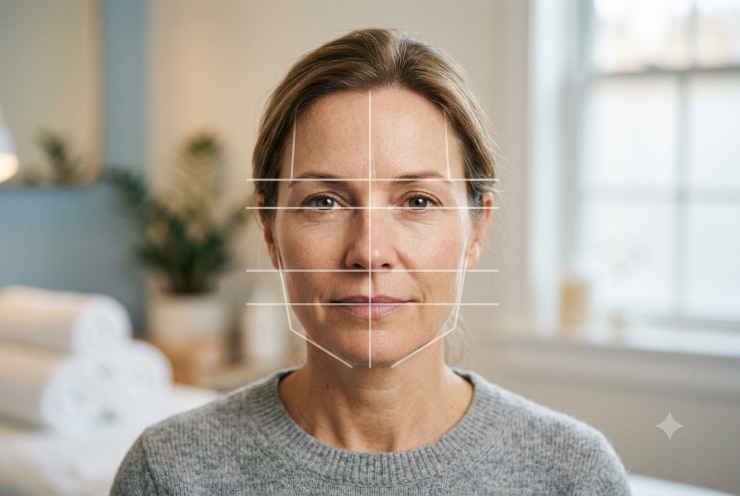
- A plan built around your actual skin — not a generic package — gives safer, more predictable results
A Word on Safety This Season
Because monsoon skin is more reactive, I always recommend:
- Choosing a clinic with medically trained professionals, not an unsupervised beauty counter
- Disclosing any current skin infection, medication, or recent procedure before treatment
- Avoiding same-day exposure to rain, dust, or unfiltered water on treated skin
- Following up with hydration and sun protection, since exfoliated skin is temporarily more vulnerable to UV and pollution
Any skin treatment during this season in Kolkata should factor in the city's specific humidity and pollution levels — a generic protocol copied from a drier climate rarely gives the same safe results.
A Closing Note
Monsoon dullness is common, and in most cases it is manageable with the right guidance rather than guesswork. Microdermabrasion is one of several evidence-based options — which one suits you depends on an individual skin assessment, not a generic routine.
If persistent dullness, uneven tone, or texture changes are affecting your skin this monsoon, consult a qualified dermatologist or cosmetic surgeon for a proper assessment.
Author:
Dr. V S Rathore
M.B.B.S. (Hons) MS, M. Ch
Plastic, Cosmetic & Reconstructive Surgeon
Frequently Asked Questions
1. Why does my skin look duller in the rainy season even though I follow my usual skincare routine?
Humidity slows down how quickly your skin sheds dead cells, so they build up on the surface instead of falling off naturally. Your regular products may not be enough to clear that buildup, which is why skin can look flat or tired even with a consistent routine.
2. Is microdermabrasion painful?
No. Most people describe it as a mild scratching or vacuum-like sensation. There's no cutting, no needles, and no anaesthesia needed. It's generally considered comfortable enough to do on a lunch break.
3. How many sessions will I need to see a real difference?
It varies by skin type, but most people start noticing brighter, smoother skin after the first session, with more noticeable evenness after 3 to 6 sessions spaced a few weeks apart. It's a gradual process, not an overnight fix.
4. Can I get this done if I already have acne breakouts from the rain?
Only if the acne is mild and not actively infected. If you have pimples that are inflamed, pus-filled, or spreading, it's best to treat the breakout first with a professional, since exfoliating over active infection can make it worse.
5. Will microdermabrasion make my skin more sensitive to rain and pollution afterward?
Yes, temporarily. Freshly exfoliated skin is more reactive for a day or two, so it's important to avoid direct rain exposure, wear sunscreen, and skip strong active ingredients until your skin settles back to normal.
[This content is for general educational purposes and does not constitute medical advice. Individual results vary. Please consult a qualified medical practitioner for a personalised assessment.]