Can Wearing Helmets, Caps, or Pagdis Cause Hair Loss? When to Worry
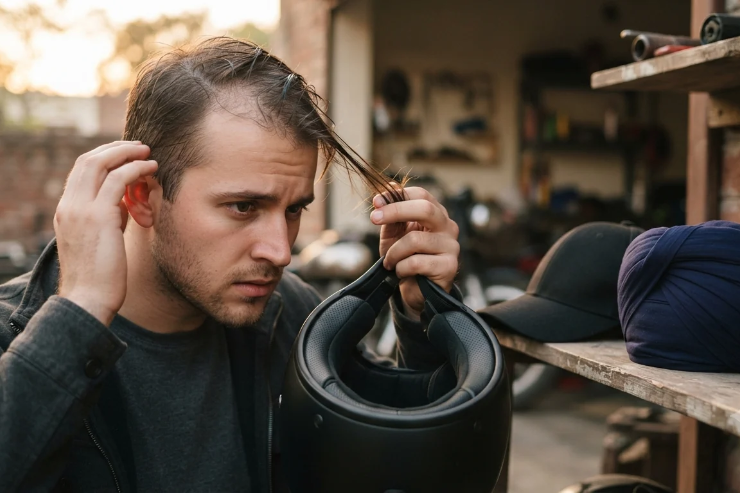
Taking off your helmet or cap and finding hair inside can be worrying, especially if your hairline also seems to be moving back. Is the headgear to blame? It is often not the main cause, but tight wear, sweat, and constant pulling can affect the hair over time. This guide explains what helmets, caps, and pagdis can do to you, how to tell it from pattern baldness, and when a doctor's check helps.
Why Hair Falls After Removing a Helmet or Cap
Finding hair inside a helmet does not always mean the helmet caused it.
According to research, it is normal to shed about 50 to 100 hairs a day. Many of these hairs are already loose. When you pull off a helmet or cap, the friction gathers them in one place, so you notice them more.
| What you see | What it often means |
| A few hairs in the helmet or cap | Normal daily shedding, collected in one spot |
| Thinning in one fixed area | Worth a closer look |
There is no study that directly links helmets to permanent hair loss, so the honest answer depends on how the headgear is worn, and for how long.
Helmet, Cap, Pagdi: What Each One Can Do to Hair
| Headgear | Possible effect on hair | What can make it worse | What helps |
| Helmet | Friction, sweat build-up, scalp irritation | A tight fit, an unwashed liner, a tight bun or ponytail underneath | A proper fit, a clean liner, loose hair underneath |
| Cap | Pressure from the band, sweat | Tight bands, wearing it for long hours, poor hygiene | A looser band, regular washing |
| Pagdi | Steady pulling at the hairline and temples | Tying the hair and pagdi very tightly every day | Lower-tension tying, softer fabric |
| Hijab or scarf | Pulling at the hairline when secured tightly | Tight pins or bands, a tight bun underneath, fabric that slips and needs retying | Softer fabrics that stay in place, loose hair underneath |
Women riders, take note: studies list tight buns and ponytails among the hairstyles with the highest risk of tension-related hair loss. A tight bun under a helmet adds both pressure and pulling.
For religious headwear, research has described tension-related hair loss in men who tie a turban tightly every day. Studies on the hijab and other headwear show the same pattern: the concern is how tightly it is secured, not the headwear or its religious significance. A loosely draped dupatta places less pull on the hair than tight wrapping.
When Constant Pulling Damages the Hair Root
Hair loss from long-term pulling is called traction alopecia. In simple words, the hair root gets tired of being pulled again and again.
According to research, the risk rises with how tightly the hair is pulled and for how long. If the pulling continues, the later stages can become permanent.
| Stage | What is happening | Can hair return? |
| Early | Hair roots are still alive; broken hairs, redness, or small bumps may appear | Often yes, once the pulling stops |
| Late | Hair roots are scarred | Usually not |
The pattern follows where the tension falls. There is no fixed timeline for when early loss turns permanent, so noticing it early matters.
Is It the Headgear or Pattern Baldness?
Many people start wearing caps or helmets daily in their twenties, the same time pattern baldness often begins. So the headgear sometimes gets the blame for something genetic.
| Clue | Pattern baldness | Headgear-related loss |
| Where it shows | Temples and crown | Where pressure or pulling falls |
| Family history | Often present | Not linked |
| Scalp | Usually calm | May be itchy, red or bumpy |
| Change after new habits | Continues | May slow or stop |
Studies note that many people with hereditary hair loss continue to lose hair without treatment.
A simple self-check:
- Compare dated photos of your hairline and crown
- Note whether parents or siblings have thinning
- Look for itching, scaling, or bumps
A doctor can confirm the cause with dermoscopy, a magnified scalp exam that shows details the eye cannot see.
Signs Your Hair Fall Needs a Doctor's Check
- Round bald patches
- Pain, tenderness, or pus-filled bumps on the scalp
- Persistent itching or scaling
- A hairline that keeps moving back
- Hair loss that continues even after changing your habits
Our guide on why scalp health matters explains how scalp problems affect hair.
Protect Your Hair Without Giving Up the Headgear
Helmet safety comes first. A helmet protects your life, so please never skip it. Small changes can protect your hair as well.
For helmets and caps:
- Choose a helmet that fits well, snug but not crushing
- Wash or replace the inner liner, or wear a clean cotton cap underneath
- Avoid sharing helmets
- Do not wear a tight bun or ponytail underneath
- Avoid wearing headgear over wet hair
- Let your scalp dry and breathe after long rides, especially in Kolkata's humidity
For pagdis:
According to research, these steps may lower tension:
- Tie the hair loosely
- Keep the base of the pagdi gentle, without pressure points
- Use a softer, non-starched fabric
For hijabs and scarves:
- Choose softer fabrics that are less likely to slip, such as cotton or jersey
- Avoid tight pins, bands, or a tight bun underneath
Where personal practice allows, studies also suggest letting the hair rest loosely at times when the turban is not required, such as during sleep.
Occasional ceremonial wear is very different from tight daily wear.
When Is a Hair Transplant Considered?
A transplant is not a treatment for the early, reversible stage. It is considered only when hair loss is permanent, or when pattern baldness is also present.
Before a transplant is considered:
- The cause of pulling has been changed or reduced
- The area has stayed stable over time
- Other scarring scalp conditions have been ruled out
Research on transplants in scarred scalp areas stresses careful patient selection. Studies report lower graft survival in scarred areas (about 50%) compared to non-scarred areas (over 90%), though this data is limited and mostly from other scarring conditions.
You can read more about receding hairline vs crown thinning, what to expect at a consultation, and aftercare after a transplant. Individual results vary from person to person.
Know the Cause Before You Decide on Treatment
Hair in your helmet or cap is often normal shedding. Tight wear, sweat, and constant pulling can still affect the hair, and pattern baldness can appear at the same age. Early changes in habits and a timely check when warning signs appear can help. If loss is permanent, understanding when a hair transplant in Kolkata is considered supports an informed choice. Please consult a qualified doctor for a personal assessment.
Author:
Dr. V S Rathore
M.B.B.S. (Hons) MS, M. Ch
Plastic, Cosmetic & Reconstructive Surgeon
Frequently Asked Questions
1. Can wearing a helmet every day cause baldness?
There is no evidence that a helmet causes genetic baldness, which depends on genes and hormones. A tight fit, sweat, or a tight bun underneath may irritate the scalp or pull at hair. Keep wearing it and adjust the fit instead.
2. Is hair fall from a cap or helmet permanent?
Usually not. Hairs found in a cap are often ones already shedding. Hair loss from long-term pulling can become permanent if it continues, so early changes in habits and a timely check matter.
3. Does a tight pagdi cause hair loss?
Tying the hair and pagdi very tightly every day can pull at the hairline and temples over time. Tying the hair loosely, keeping the base of the pagdi gentle, and using softer fabric may lower this tension.
4. Should I stop wearing a helmet if I notice hair fall?
No. A helmet protects your life and should always be worn. Choose a well-fitting helmet, use a clean cotton liner, avoid tight buns underneath, and see a doctor if hair fall continues or patches appear.
5. How do I know if my hair fall needs a transplant?
Many cases of hair fall do not need surgery. A transplant is considered only for permanent, stable loss after the cause is controlled. A doctor's assessment can help you understand whether a hair transplant in Kolkata or medical care fits you.
Disclaimer: This content is for general educational purposes only and does not constitute medical advice. Individual results may vary. Please consult your treating doctor for a personalised assessment before starting any treatment.