Blepharoplasty Treatment in Kolkata: What Your Eyes Really Need
It often starts with a simple comment: “You look tired.”
Even when you feel fine, your eyes may be telling a different story.
For many people exploring blepharoplasty treatment in Kolkata, the concern isn’t just appearance—it’s how quickly the eye area seems to age compared to the rest of the face. Creams help a little. Sleep helps a little. But the tired look often stays.
This happens because the skin and structure around the eyes change earlier and faster than other areas. Understanding what’s actually happening can help you choose the right solution—whether that’s non-surgical care or a more definitive approach.
Why Do the Eyes Show Ageing Before the Rest of the Face?
The eye area is structurally different.
- The skin here is thinner
- There is less natural oil support
- Muscles are constantly active (blinking, expressions)
- Fat support is delicate and shifts easily
Because of this, even small changes become visible quickly. While the rest of the face may still look firm, the eyes start showing fatigue, heaviness, or puffiness.
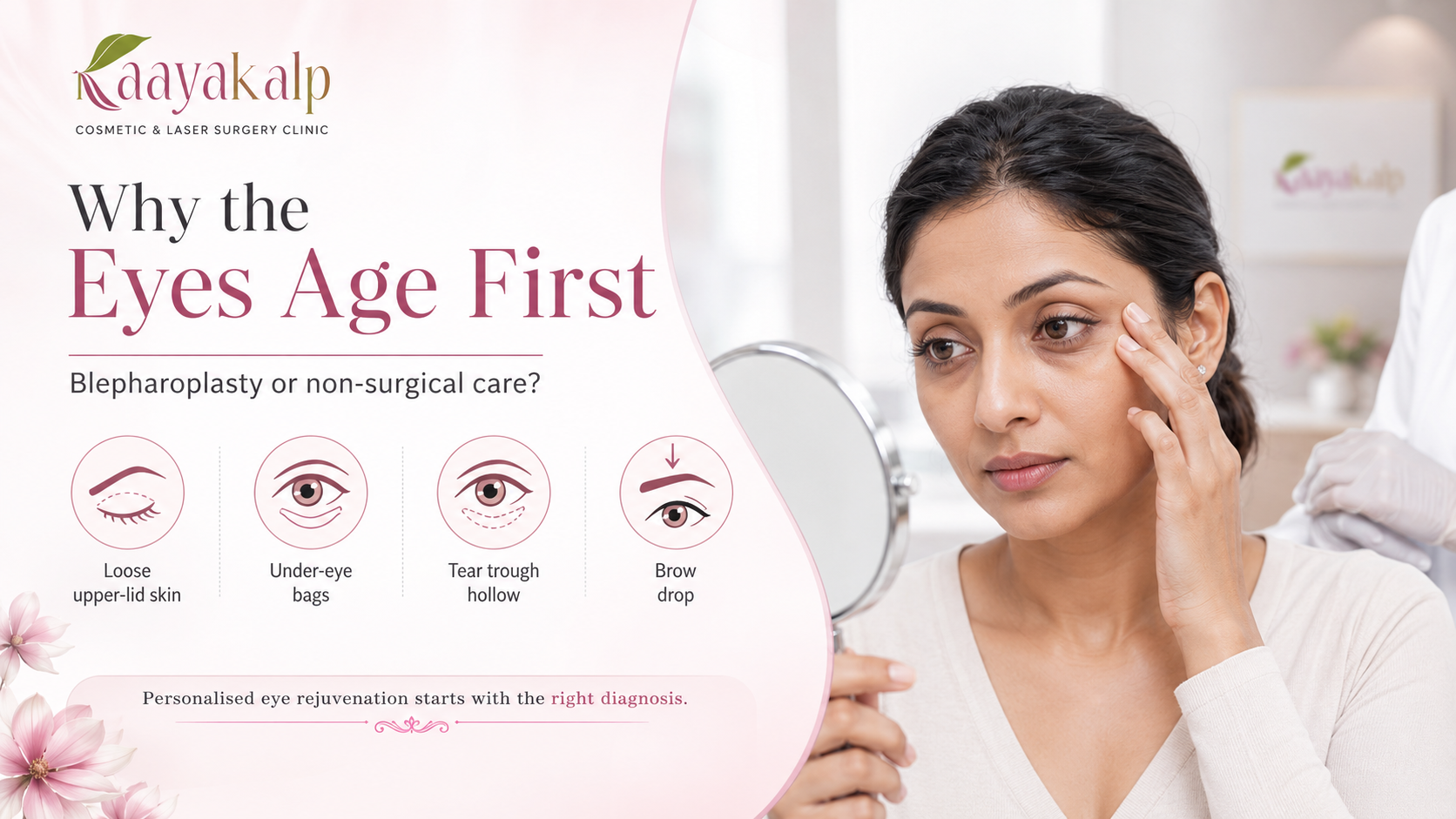
What’s Actually Happening? The 4 Changes That Age Your Eyes
Eye ageing is not one single issue. It’s usually a combination of four different changes.
1. Excess Skin on the Upper Eyelids
The upper eyelid can gradually develop loose or folding skin. This creates a “hooded” look and may even affect vision in advanced cases.
2. Fat Protrusion (Under-Eye Bags)
Fat that normally supports the eye can shift forward, creating visible puffiness or bags under the eyes.
3. Volume Loss in the Tear Trough
The area between the lower eyelid and cheek can hollow out. This creates shadows that make the face look constantly tired.
4. Brow Position Changes
A slight drop in the brow can make the eyelids appear heavier, even if the skin itself is not very loose.
Each of these requires a different approach. Treating all eye concerns the same way often leads to disappointing results.
Can Non-Surgical Treatments Improve Eye Ageing?
In early stages, yes. Non-surgical options can help when changes are mild to moderate.
Fillers for Under-Eye Hollows
Useful for tear trough correction. They restore volume and reduce shadowing.
Skin Boosters and Regenerative Treatments
Options like hydration boosters or collagen-stimulating treatments improve skin quality and texture over time.
Energy-Based Treatments
These can help tighten mild skin laxity and improve overall firmness.
These approaches work best when the concern is skin quality or mild volume loss, not excess skin or prominent fat bags.
When Is Blepharoplasty the Better Option?
Non-surgical treatments have limits.
If the concern involves:
- Significant loose skin on the upper eyelid
- Persistent under-eye bags
- Visual obstruction due to heavy lids
- Repeated filler treatments with limited improvement
Then blepharoplasty treatment in Kolkata becomes a more effective and long-lasting solution.
This procedure removes or repositions excess skin and fat. It directly addresses the structural cause, not just the surface appearance.
Blepharoplasty vs Fillers for Under-Eye: How to Decide
This is one of the most common patient questions.
Fillers work best when:
- The issue is hollowing, not puffiness
- Skin is still relatively firm
- You want subtle correction
Blepharoplasty works better when:
- There are visible eye bags
- Skin is loose or folding
- Previous treatments haven’t helped
Choosing incorrectly can either under-correct or overcomplicate the result. That’s why proper evaluation matters.
What Is Recovery Like After Eyelid Surgery?
Recovery is often simpler than people expect.
- Mild swelling and bruising for a few days
- Most visible recovery within 10–14 days
- Return to routine activities relatively quickly
The results settle gradually, revealing a fresher, more rested appearance rather than a drastic change.
Does Blepharoplasty Change Your Face?
No. It refines one specific area.
The goal is not to change how you look—but to remove the features that make you look tired or older than you feel.
Most people notice:
- Brighter eyes
- Better definition around the eyelids
- A more alert, refreshed expression
How to Choose the Right Approach for Your Eyes
The right decision depends on identifying the dominant concern.
- Skin issue → tightening or surgery
- Volume issue → fillers
- Texture issue → skin treatments
- Combination → layered approach
At clinics like Kaayakalp, treatment planning focuses on this kind of detailed assessment rather than a one-size-fits-all solution. Under the guidance of experienced professionals like Dr. V.S. Rathore, the aim is to match the treatment to the actual cause—not just the visible symptom.
Why Treating the Eye Area Early Makes a Difference
The eye area influences how the entire face is perceived.
Even small improvements here can:
- Reduce the appearance of fatigue
- Improve facial balance
- Delay the need for more extensive treatments later
Addressing concerns early often means simpler, more natural-looking solutions.
Final Thoughts
Eye ageing is rarely about one single problem. It’s a mix of skin, fat, and structural changes that need careful evaluation.
Understanding what’s causing the tired look is the first step toward choosing the right treatment—whether that’s non-surgical care or blepharoplasty.
At Kaayakalp, the focus is on personalised planning that respects natural facial balance while delivering meaningful improvement.
Book a consultation to understand whether non-surgical options or blepharoplasty is right for your concern. The right guidance helps you make a confident, informed decision.
FAQs
1. What is the best treatment for droopy eyelids?
Mild drooping can improve with non-surgical treatments, but significant excess skin is best treated with blepharoplasty for long-lasting and visible improvement.
2. Are under-eye fillers enough for eye bags?
No. Fillers help hollow areas, not puffiness. Under-eye bags caused by fat require surgical correction for effective and lasting results.
3. How long does blepharoplasty last?
Results typically last many years. While ageing continues, the improvement in eyelid contour and appearance remains stable for a long time.
4. Is eyelid surgery painful?
The procedure is usually done under local anaesthesia. Discomfort is minimal and manageable, with most patients reporting mild soreness during recovery.
5. How do I know if I need blepharoplasty or fillers?
A proper consultation helps determine whether your concern is due to volume loss, fat protrusion, or skin laxity, guiding the right treatment choice.