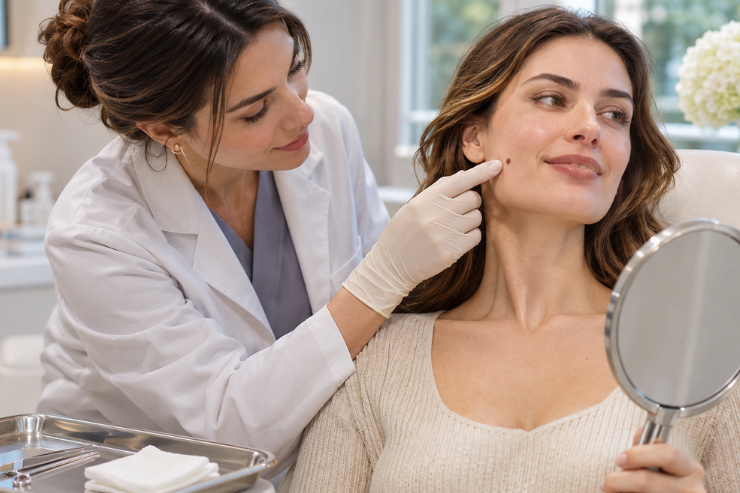
Does Your Mole Need Removal? Safety, Scars, and Healing Explained
A mole that suddenly looks darker, catches on your collar, or keeps drawing your eye in the mirror can be worrying. Most moles are harmless and do not need removal. A changing mole, however, deserves a medical check first. When removal is chosen, the method depends on the mole, and any method can leave a mark that usually fades. This guide explains warning signs, laser treatment cost in Kolkata, scars, and healing, so you can decide calmly.
Does Every Mole Need to Be Removed?
No. A harmless mole can safely stay where it is. People usually choose removal for one of three reasons:
| Reason | Example |
| Medical | The mole is changing or looks unusual |
| Comfort | It rubs on clothes, catches on a razor, or bleeds |
| Cosmetic | It affects how you feel about your appearance |
Each reason is valid. Once the mole has been checked, the choice is yours.
Is Your Mole Normal? Signs to Watch For
According to research, moles are very common and usually harmless. Most adults have several. A small number of changes, though, are worth a closer look.
Studies use the ABCDE checklist to tell the two apart:
| Letter | What to look for |
| A – Asymmetry | One half doesn't match the other |
| B – Border | Edges are uneven, notched or blurred |
| C – Colour | Several shades, or patches of red, white or blue |
| D – Diameter | Usually larger than 6 mm (a pencil eraser), though it can be smaller |
| E – Evolving | Any change in size, shape or colour |
Having one of these signs does not mean something is seriously wrong. It simply means the mole should be examined.
When Should a Changing Mole Be Checked?
It's worth having a mole checked when:
- Any ABCDE sign appears
- It bleeds or itches without a clear reason
- It looks different from your other moles
- A new mole after the age of 30, which studies suggest is worth checking
What a check usually involves:
- A close look at the mole, sometimes with a magnifying skin scope
- Questions about how long it has been there and any changes
- A small sample, only if the doctor needs one
A dermatologist or a plastic surgeon in Kolkata can examine the mole and explain whether it needs any treatment. Most checked moles turn out to be harmless.
Laser or Surgery: Which Mole Removal Suits You?
Surgical Mole Removal
- Excision: the mole is cut out, and the skin is closed with fine stitches. This is often used for deep, raised, or suspicious moles.
- Shave removal: a raised mole is gently shaved level with the skin. This is used for some harmless raised moles.
- The area is numbed with local anaesthetic beforehand.
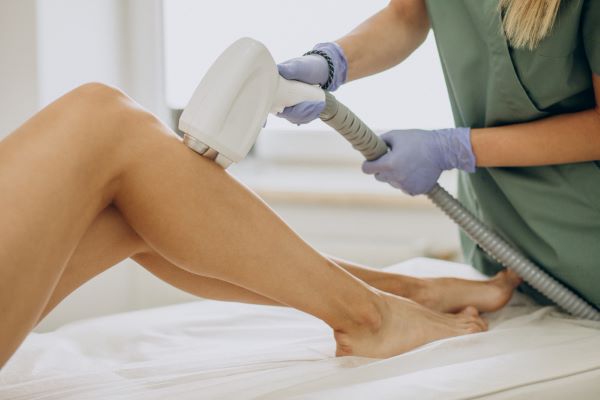
Laser Mole Removal
- Suits small, flat, harmless moles
- Usually needs no stitches
- May need more than one session
- Some colour can return if deeper cells remain
| Feature | Surgical removal | Laser removal |
| Suitable for | Deep, raised or suspicious moles | Small, flat, harmless moles |
| Sample for testing | Yes | No |
| Sessions | Usually one | Sometimes more than one |
| Chance of returning | Lower when fully removed | Higher |
| Stitches | Sometimes | No |
What affects cost: whether you are looking at laser treatment cost in Kolkata or plastic surgery costs in Kolkata for face procedures, the main factors are:
- Size and depth of the mole
- Number of moles
- Removal method
- Number of sessions
- Whether lab testing is needed
Why Suspicious Moles Need Surgery, Not Laser
This is one of the most important points about mole removal.
- Laser breaks down the mole tissue, so nothing is left to test.
- Surgery removes the mole whole, so it can be studied under a microscope.
According to research, lasers often cannot remove all the mole cells, and a suspicious mole must first be ruled out as melanoma, a type of skin cancer.
For this reason, laser is generally used only for moles already confirmed as harmless.
Why Are Some Moles Sent for Lab Testing?
Lab testing confirms exactly what the mole was. It is routine after surgical removal, not a sign that something is wrong.
Studies of removed moles found that about 1 in 200 moles that looked ordinary turned out to be melanoma. Testing helps make sure nothing is missed.
- Results usually take a few days to a couple of weeks.
- Most results confirm a harmless mole.
- If anything unusual is found, your doctor will explain the next steps clearly.
Will Mole Removal Leave a Scar on My Face?
On the face, it often fades well over time because facial skin has a good blood supply.
| Factor | How it affects the mark |
| Size and depth | Larger, deeper moles leave a bigger mark |
| Location | Some areas heal more visibly than others |
| Method | Excision leaves a fine line; laser may leave a light spot |
| Skin type | Indian skin can darken for a while after healing |
| Healing tendency | Some people form raised (keloid) scars |
If you have had raised scars before, our guides on keloid scars and scar care after surgery explain what can help.
Individual results vary from person to person.
How Long Does Healing Take After Mole Removal?
| Time | What to expect |
| First week | Mild redness, a small scab or stitches |
| 1 to 2 weeks | The scab falls off; stitches are removed if used |
| 1 to 3 months | The pink or dark mark gradually fades |
| Up to a year | The scar continues to soften and settle |
Aftercare Tips for Smoother Healing
- Keep the area clean and dry, as advised
- Apply the ointment or dressing recommended for you
- Avoid picking the scab
- Use sunscreen daily once healed, to reduce darkening
- Report spreading redness, pus, fever, or heavy bleeding
Healing time varies from person to person.
Know If Your Mole Needs a Removal
Most moles are harmless and can stay as they are. A changing mole deserves a check by a dermatologist or cosmetic surgeon in Kolkata before making any decision. When removal is chosen, surgery and laser each suit different moles, and both heal with a mark that usually fades over time. Questions about scarring or laser treatment cost in Kolkata become easier to answer once the type of mole is known.
Author:
Dr. V S Rathore
M.B.B.S. (Hons) MS, M. Ch
Plastic, Cosmetic & Reconstructive Surgeon
Frequently Asked Questions
Q1. Does mole removal hurt?
The area is numbed with local anaesthetic, so most people feel only a brief pinch at the start. Mild soreness afterwards usually settles within a few days with simple care.
Q2. Can a mole grow back after removal?
It can, especially after laser or shave removal if some cells remain. Full surgical removal has a lower chance of this. Any regrowth should be shown to your doctor.
Q3. Is it safe to remove a mole at home?
No. Cutting, burning, or using removal creams at home can cause infection and scarring. It also leaves nothing to test if the mole needed medical attention.
Q4. Is laser mole removal suitable for Indian skin?
It can be, for small, harmless moles. Darker skin has a higher chance of temporary colour changes after laser, so the mole and skin type are assessed first.
Q5. When can I wear makeup after facial mole removal?
Usually once the wound has fully closed and any stitches have been removed. Applying makeup too early may irritate the area, so follow the timing you are given.
Disclaimer: This content is for general educational purposes only and does not constitute medical advice. Individual results may vary. Please consult your treating doctor for a personalised assessment before starting any treatment.