Scar Management After Surgery: A Complete Guide to Better Healing
Scars continue to evolve long after a wound has healed. Whether they result from surgery or an injury, the way a scar matures can be influenced by the care it receives during recovery.
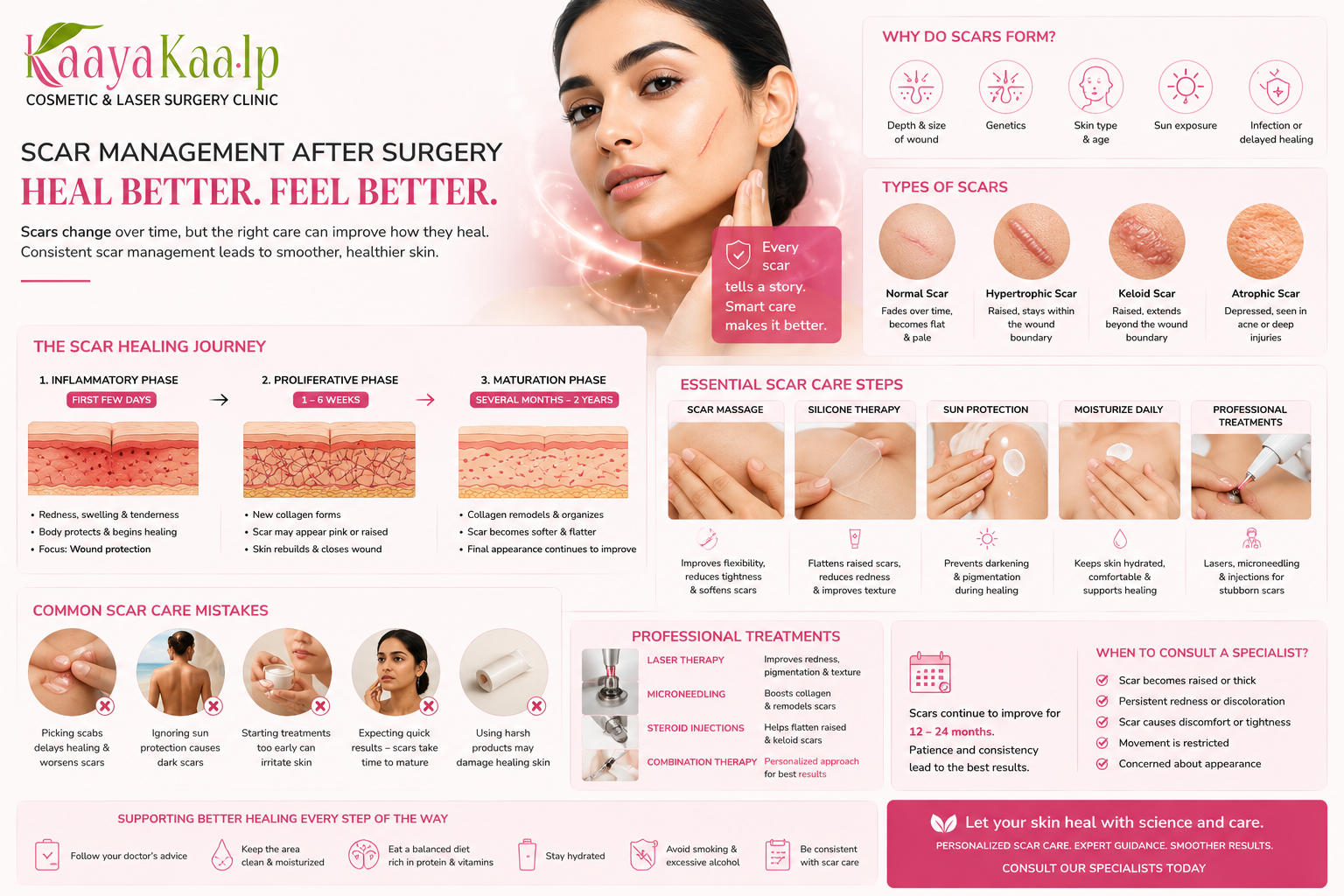
Effective Scar Management After Surgery involves supporting the skin through different stages of healing with approaches such as scar massage, silicone therapy, sun protection, and, when needed, professional treatments. Understanding when and how to use these methods can help promote healthier scar development over time.
This guide explains the key steps involved in scar care and what you can realistically expect during the healing process.
Why Do Some Scars Heal Better Than Others?
Not all scars develop the same way.
Several factors influence how a scar matures, including:
- The depth and size of the wound
- The location of the injury
- Genetics
- Skin type
- Age
- Sun exposure during healing
- Infection or delayed wound healing
Even when two people undergo the same procedure, their scars may heal differently.
While genetics cannot be changed, proper scar care can significantly influence the final appearance of a scar.
Understanding the Stages of Scar Healing
Before discussing treatments, it helps to understand how scars develop.
Stage 1: Inflammatory Phase (First Few Days)
Immediately after injury or surgery, the body focuses on stopping bleeding and preventing infection.
During this stage:
- Redness is common
- Swelling occurs
- The wound may feel tender
The priority is wound protection—not scar treatment.
Stage 2: Proliferative Phase (1–6 Weeks)
New collagen begins forming.
The skin starts rebuilding itself and closing the wound.
At this stage, scars often appear:
- Pink
- Red
- Slightly raised
This is normal.
Stage 3: Maturation Phase (Several Months to 2 Years)
Collagen gradually reorganizes.
The scar slowly becomes:
- Flatter
- Softer
- Less noticeable
This is the longest phase of healing and where most scar improvement occurs.
When Should You Start Scar Management After Surgery?
One of the most common questions patients ask is when scar treatment should begin.
The answer depends on wound healing.
Scar management should typically begin only after:
- The wound has completely closed
- There are no open areas
- No infection is present
- Your treating doctor has approved scar care
Starting too early can interfere with healing.
Starting at the right time helps guide healthy scar development.
How Important Is Scar Massage?
Scar massage is one of the most recommended scar management techniques once healing has progressed adequately.
Why Scar Massage Helps
As scars mature, collagen fibers can become stiff and disorganized.
Gentle massage may help:
- Improve flexibility
- Reduce tightness
- Improve tissue mobility
- Soften raised scars
When Can You Start Scar Massage?
Timing varies depending on the wound and procedure.
Most patients can begin after complete wound closure and medical clearance.
Always follow your surgeon's instructions regarding timing and technique.
How Often Should Scar Massage Be Done?
Many clinicians recommend:
- A few minutes at a time
- Multiple sessions throughout the day
- Consistent practice over several months
Consistency is more important than intensity.
Does Silicone Therapy Actually Work?
Among all scar treatments, silicone therapy has one of the strongest evidence bases.
What Is Silicone Therapy?
Silicone is available in two common forms:
- Silicone gel
- Silicone sheets
Both create a protective environment over the scar.
Benefits of Silicone Scar Therapy
Research suggests silicone can help:
- Reduce scar thickness
- Improve hydration
- Minimize redness
- Flatten raised scars
It is particularly useful for scars that show signs of becoming hypertrophic or raised.
How Long Should Silicone Be Used?
Most scar specialists recommend continued use for several weeks or months.
Scar improvement happens gradually, not overnight.
Why Sun Protection Is Essential for Scar Healing
Many people focus on creams and treatments while overlooking one of the most important factors: sun protection.
Fresh scars are highly sensitive to ultraviolet radiation.
Without protection, scars may become:
- Darker
- More noticeable
- Permanently discolored
How to Protect Healing Scars
Depending on the location of the scar:
- Use broad-spectrum sunscreen
- Wear protective clothing
- Avoid excessive sun exposure
- Use hats when appropriate
Sun protection becomes especially important during the first year of scar maturation.
Can Moisturizers Improve Scar Appearance?
While moisturizers do not erase scars, they support healthy skin healing.
Hydrated skin tends to feel:
- Softer
- Less itchy
- More comfortable
Moisturizing may also complement scar massage and silicone therapy.
Choose products recommended by your treating physician, especially if your skin is sensitive.
What Makes Some Scars Raised or Thick?
Not all scars remain flat.
Some individuals develop:
Hypertrophic Scars
These scars:
- Remain within the boundaries of the original wound
- Become thick and raised
- May improve over time
Keloid Scars
Keloids extend beyond the original injury.
They may:
- Continue growing
- Feel itchy
- Become cosmetically bothersome
People with a personal or family history of keloids should discuss preventive strategies with their doctor early in the healing process.
What Treatments Help If a Scar Becomes More Noticeable?
Sometimes home care alone is not enough.
Professional scar treatment options may include:
Laser Treatments
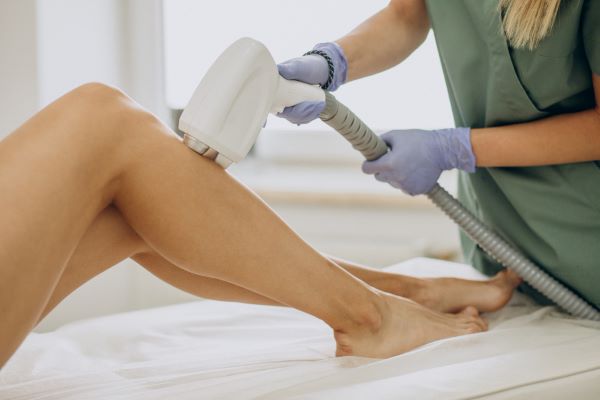
Laser therapy can help improve:
- Redness
- Texture
- Pigmentation differences
Microneedling
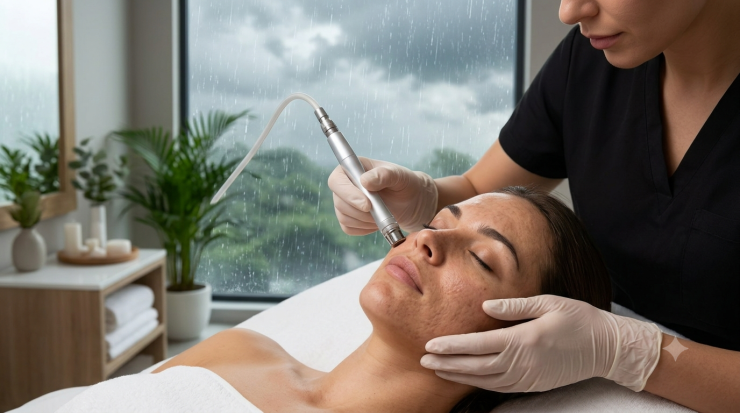
Microneedling stimulates collagen remodeling and may improve certain scar types.
Steroid Injections
Often used for raised scars and keloids.
These injections can help flatten excessive scar tissue.
Combination Treatments
Many scars respond best to a combination of therapies tailored to their characteristics.
The right treatment depends on:
- Scar type
- Scar age
- Skin type
- Individual healing patterns
Common Scar Care Mistakes to Avoid
Even with the best intentions, certain habits can slow improvement.
Picking Scabs
Removing scabs prematurely increases the risk of more noticeable scarring.
Ignoring Sun Protection
UV exposure can significantly affect scar color and appearance.
Starting Aggressive Treatments Too Early
The healing process needs time.
Over-treating a fresh wound may cause irritation and delay recovery.
Expecting Immediate Results
Scar remodeling is a gradual biological process.
Meaningful improvement often occurs over months rather than weeks.
How Long Does It Take for a Scar to Fully Mature?
Many people assume scars stop changing after a few weeks.
In reality, scar maturation often continues for:
- 12 months
- 18 months
- Sometimes up to 24 months
The final appearance of a scar may look very different from how it appeared during the first few months.
Patience plays an important role in successful scar management.
When Should You Consult a Scar Specialist?
Consider seeking professional evaluation if:
- The scar becomes increasingly raised
- There is persistent redness
- The scar causes discomfort
- Movement is restricted
- You are concerned about cosmetic appearance
Early intervention is often more effective than waiting until a scar becomes established.
Supporting Better Healing at Every Stage
Scars tell the story of healing, but they do not have to define the final outcome.
Effective Scar Management After Surgery combines proper timing, consistent care, sun protection, scar massage, and evidence-based treatments when needed. Understanding how scars mature allows you to make informed decisions instead of relying on myths or quick fixes.
At Kaayakalp, scar care is approached with an understanding that every scar behaves differently. Treatment recommendations are tailored to the scar type, stage of healing, and individual skin characteristics.
If you are concerned about a surgical scar, injury scar, or raised scar, book a consultation with the experts at Kaayakalp to explore the most appropriate scar management options for your skin.
Frequently Asked Questions
1. When should I start scar massage after surgery?
Scar massage is usually started after the wound has fully healed and your surgeon confirms it is safe to begin.
2. Do silicone sheets really help scars?
Yes. Silicone sheets and gels are among the most studied scar therapies and can help reduce thickness, redness, and scar elevation.
3. How long does it take for a scar to fade?
Most scars continue improving for 12–24 months as collagen remodels and the scar gradually becomes softer and less visible.
4. Can sun exposure make scars worse?
Yes. UV exposure can darken healing scars and make discoloration more persistent, which is why sun protection is strongly recommended.
5. What is the best treatment for raised scars?
Raised scars may respond to silicone therapy, steroid injections, laser treatments, or combination approaches depending on the scar type and severity.